 /
 Français
 English
This module explores the evolutionary origins of biological membranes and the environmental constraints that shaped their emergence and diversification. Topics include lipid chemistry and self-assembly, critical micellar concentration, membrane permeability, membrane fission, ion channels and pumps, lipid transporters, and membrane adaptations to extreme environments.
UE12 Molecular biology of cell membranes
ECUE's code : SMUSVV12

EUR LIFE

Biochimie et biologie moléculaire

Campus Valrose

Master 1

Semestre impair

Anglais
PRESENTATION
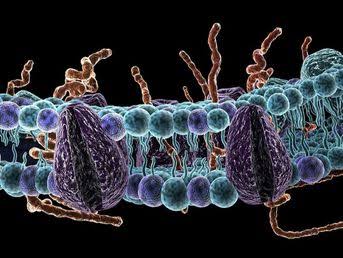
The Molecular Biology of Cellular Membranes course provides an integrated and multidisciplinary overview of biological membranes, from their evolutionary origins and molecular organization to their roles in cell physiology, human disease, and biomedical innovation. It combines concepts from cell biology, biochemistry, biophysics, physiology, pharmacology, and biotechnology to provide students with a comprehensive understanding of membrane structure and function.
The course examines the physicochemical and evolutionary principles underlying membrane formation, together with membrane lipid composition, diversity, and dynamics. Students explore how lipids and proteins interact to organize cellular membranes, how lipid composition is regulated and adapted to environmental or pathological conditions, and how lipids are exchanged between intracellular compartments through membrane contact sites and lipid transfer proteins.
A major focus is placed on membrane proteins and cellular communication, including protein–membrane interactions, intracellular protein trafficking, vesicular transport, endocytosis, exocytosis, and membrane-dependent signaling pathways. The course also covers the molecular mechanisms of membrane transport in excitable and non-excitable cells, including ion channels, transporters, exchangers, aquaporins, membrane potentials, electrical signaling, synaptic transmission, and their involvement in human diseases.
The pharmacology of ion channels and membrane transporters is addressed through natural and synthetic modulators, illustrating their value as experimental tools and therapeutic targets. Finally, students examine how fundamental discoveries in membrane biology are translated into biomedical and biotechnological applications, including drug discovery, targeted and gene delivery, synthetic biology, nanomedicine, and precision medicine.
Lectures are complemented by tutorials based on primary scientific literature and experimental data, enabling students to develop critical skills in data interpretation, evaluation of experimental strategies, identification of study limitations, and scientific communication.
Course's manager(s)
, Delphine Bichet
In class
- 20h of lectures
- 20h of directed studies
PREREQUISITES
Before the start of the course, I must ...
-
Students are expected to have a Bachelor’s-level background in life sciences, with basic knowledge of: Cell and molecular biology Biochemistry and protein structure/function General principles of cell physiology Basic membrane structure and organization Fundamental concepts of membrane transport and cell signaling Basic principles of genetics and gene expression A basic understanding of bioenergetics, electrochemical gradients, and ion transport is recommended but not mandatory. Students should also be able to read and understand scientific articles in English.
OBJECTIVES
By the end of this course, I should be able to...
- Acquire advanced knowledge of the structural and functional organization of cell membranes, understand signaling pathways and the mechanisms governing the assembly and functioning of cell membranes, and be able to interpret literature data in the field.At the end of the course, students should be able to: Explain the principles underlying membrane organization and function; Describe the mechanisms regulating membrane transport, signaling, and trafficking; Interpret experimental data from primary research articles; Critically evaluate current literature in membrane biology; Communicate scientific concepts related to biological membranes using appropriate terminology.
CONTENT
-
Evolutionary and environmental aspects of biological membranes

-
Membrane lipid composition
This module examines the diversity and regulation of membrane lipid composition. Students will explore how lipid composition varies among tissues, adapts to environmental changes, and is altered in disease. The course introduces modern approaches including genetic engineering, metabolic manipulation, synthetic biology, chemical biology, and mass spectrometry-based lipidomics.
-
Protein-membrane interactions
This module focuses on the molecular mechanisms by which peripheral membrane proteins recognize and bind specific cellular membranes. Particular emphasis is placed on lipid-binding domains, amphipathic helices, lipid modifications, and the structural basis of electrostatic, hydrophobic, and stereospecific membrane interactions.
-
Lipid dynamics
Students will examine the dynamic behavior of membrane lipids, including lateral diffusion, flip-flop, and inter-organelle lipid transport. The module covers lipid transfer proteins, membrane contact sites, non-vesicular lipid transport, sterol homeostasis, and the coupling between lipid metabolism and intracellular signaling.
-
Role of membrane receptors in the Hedgehog signaling
This module explores the molecular basis of Hedgehog signaling, focusing on the membrane receptors Patched and Smoothened. Students will study pathway activation, transcriptional regulation, developmental functions, stem cell biology, human diseases, and current therapeutic approaches targeting Hedgehog signaling.
-
The inner life of proteins : trafficking and exchanges between intracellular
The aim of this module is to give an overview of the mechanisms that account for the transport of proteins between subcellular organelles, from their synthesis to their functional distribution. Topics include protein sorting, vesicular transport, SNARE proteins, Rab GTPases, endocytosis, exocytosis, lysosomal targeting and autophagy.
-
Membrane transport mechanisms in non-excitable cells
This module examines transport systems operating in epithelial and other non-excitable cells. Topics include ion channels, transporters, exchangers, aquaporins, tight junctions, nutrient transport, osmotic regulation, and the molecular basis of diseases such as cystic fibrosis, diabetes, and Liddle syndrome.
-
Membrane transport mechanisms in excitable cells
This module introduces the principles of membrane bioelectricity, including membrane potential and equilibrium potential. Students will study voltage-gated and ligand-gated ion channels, mechanisms of channel gating and regulation, synaptic transmission, neuronal integration, neurotransmission, and synaptic plasticity.
-
Pharmacology targeting ion channels and transporters
The final module explores pharmacological approaches targeting ion channels and membrane transporters. Students will examine natural and synthetic channel modulators, their mechanisms of action, their value as research tools, and their therapeutic potential in neurological, cardiovascular, metabolic, and inflammatory diseases.
-
Cell membrane in biomedicine and biotechnology
This course illustrates how fundamental discoveries in membrane biology have transformed biotechnology and medicine. It examines the pivotal roles of biological membranes in drug discovery, targeted drug delivery, synthetic biology, nanomedicine, and precision medicine. Students will explore how membrane proteins, lipids, and membrane dynamics are exploited to develop innovative diagnostic tools, therapeutic strategies, gene delivery systems, and advanced biotechnological applications, while discussing current challenges and future perspectives in translational membrane research.
Access to complete Syllabus (Authentification required)
Important
This syllabus has no contractual value. Its content is subject to change throughout this year: be aware to the last updates